7/5/2023
•
Posted by Dr. Lisa Moreno, Pediatrician and Fidelis Care Medical Director
in
Children's Health,
Health and Wellness
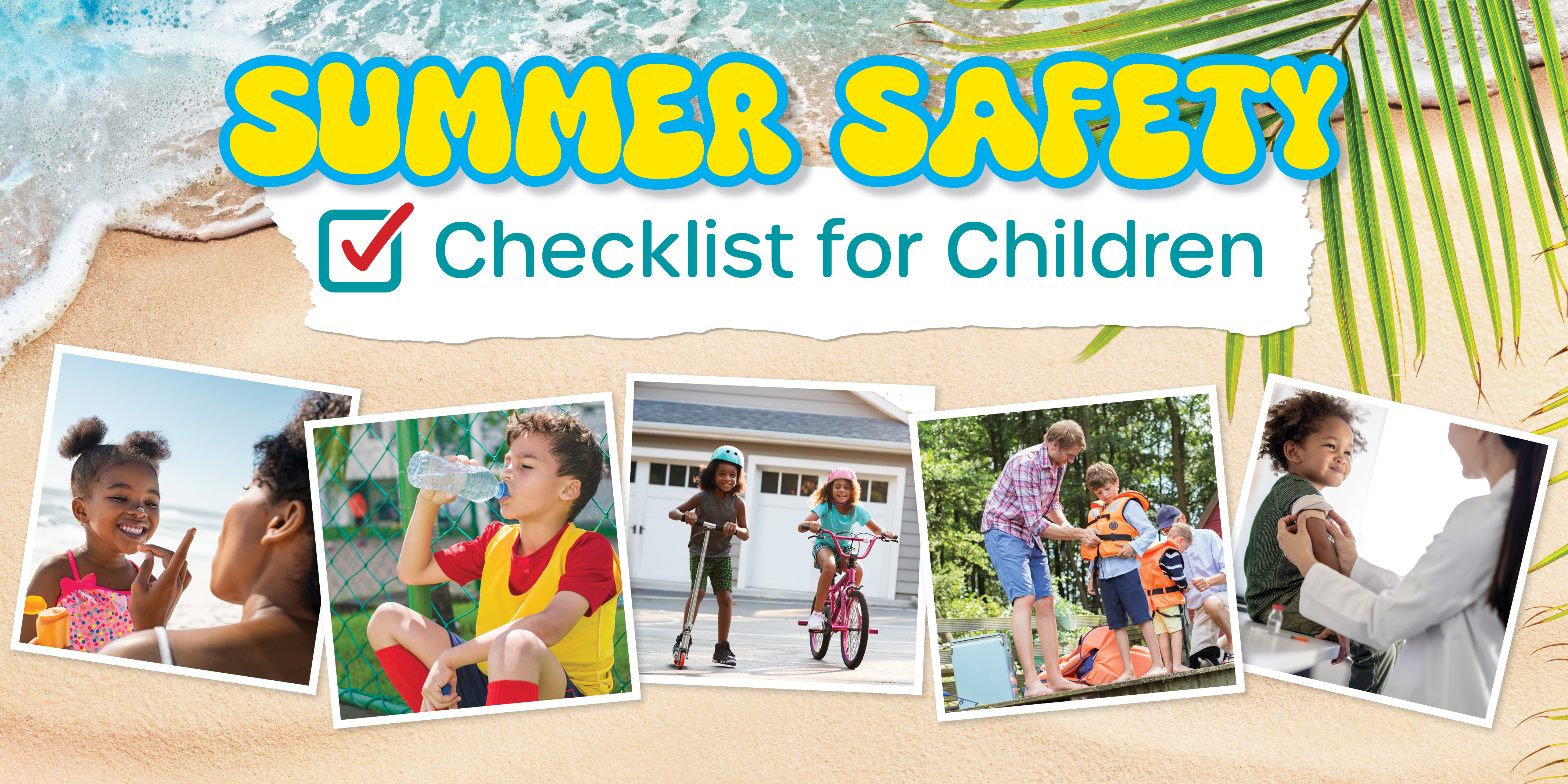
Summer is here! It’s time for children to enjoy the outdoors and spend time with friends. Here are some tips to help your children stay safe and healthy before the new school year.
The power of play
Keep your children moving this summer. You can help your kids prepare mentally, physically, and emotionally for the upcoming school year with healthy and fun summer activities.
Enjoy the outdoors in place of screen time. The earlier you share nature with children, the more likely they are to develop a lifelong love of the outdoors.
Have kids try a new sport, bike riding, or a brisk walk. When bike riding, kids and adults should always wear a properly fitting helmet. If indoors, encourage activities that promote movement such as dancing, yoga, jump rope, or running in place.
Practice sun safety
Children over 6 months of age should always use sunscreen when outdoors. Choose a sunscreen that says “broad-spectrum” on the label with a sun protection factor (SPF) of at least 15.
Keep babies younger than 6 months out of direct sunlight. Find shade under a tree, an umbrella, or a stroller canopy. If an infant younger than 6 months must be in the sun, apply sunscreen to areas of skin not covered by clothing and hats.
Stay hydrated
Make sure children drink plenty of water (or breast milk/formula for infants). Avoid sugary beverages. Dress them in loose-fitting, light-colored clothing. Never leave children alone in a car.
Prevent insect bites
Apply insect repellant to children before spending time outdoors. Repellents that contain DEET are among the most effective insect repellents, as long as you follow directions and use the product safely. DEET repels biting insects such as mosquitoes and ticks. The American Academy of Pediatrics recommends repellents for children older than 2 months of age use 10% to 30% DEET. DEET should not be used on children younger than 2 months.
Wear hats to protect against ticks when walking in the woods or through high grasses or overgrown brush. Check for ticks at the end of hikes.
Do not use products that combine sunscreen with DEET. Sunscreen should be applied every two hours, and DEET should only be used once a day. Store DEET and other repellents away from children’s reach.
Water safety
Small children and children who are still learning to swim should wear life jackets any time they are around water, including pools and water parks. Never leave small children unattended near pools or any body of water. Pools should be surrounded by a fence, with a secure gate.
Parents and teens should understand how alcohol and drug use increases the risk of drowning while swimming or boating.
Schedule well visits
Take advantage of the time away from school to schedule your children’s annual well care visit.
The American Academy of Pediatrics recommends all children get annual well care visits. These yearly appointments are performed with preventive care in mind. You can help get your children ready for a healthy summer by scheduling their annual well care visit soon as children need to be up to date with their vaccines for the upcoming school year.
Remember to enjoy these warm, sunny months with your children. Have a safe, happy, and healthy summer!